
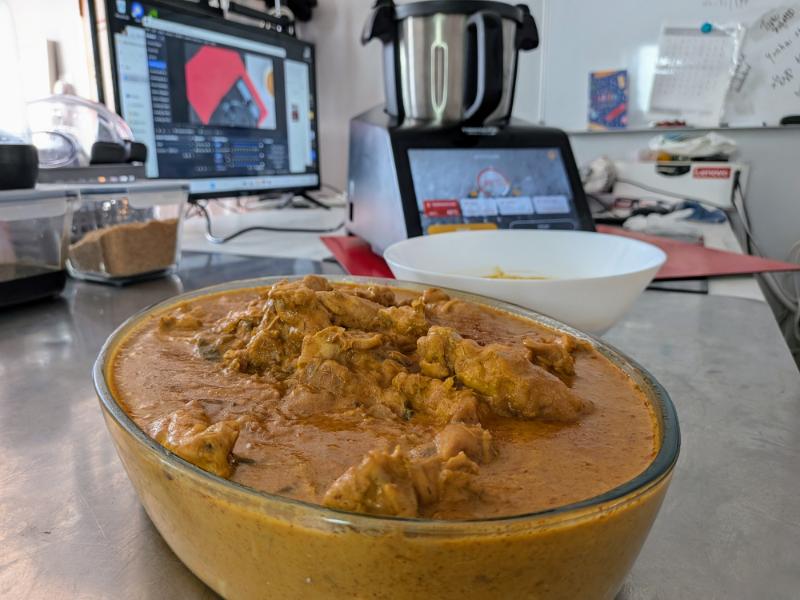
Thermocook vs Thermomix – 8 Differences for Malaysian Cooking
I’ve had a long history of using thermo cookers in my kitchen – I was a TM5 Thermomix consultant, then I wasn’t, then I was a TM6 & TM7 consultant, and now I’m not.
I’ve written a bunch of Malaysian recipes for use in these machines, published e-book collections, and run cooking classes on them.
And of course, I’ve used them for my Malaysian food business.
In between, I’ve been asked to evaluate other competing brands, notably the Thermocook, going as far back as 2016 (you can still find my content online on older versions of the brand).
But it’s been a good five years since I owned a Thermocook (there was nothing wrong with them; I just had too many machines in the house so I gave them away), which means I’ve been out of touch with the newer models.
So when I received an evaluation unit of the Thermocook Pro M 3.0 three weeks ago, I was basically starting from scratch in terms of learning its functionalities and how it compares with the Thermomix (broadly, the TM6 & TM7, since they’re the two most current versions).
Over the course of the last two and a half weeks, these are some of what I’ve used the Thermocook to make –
Beef Rendang –
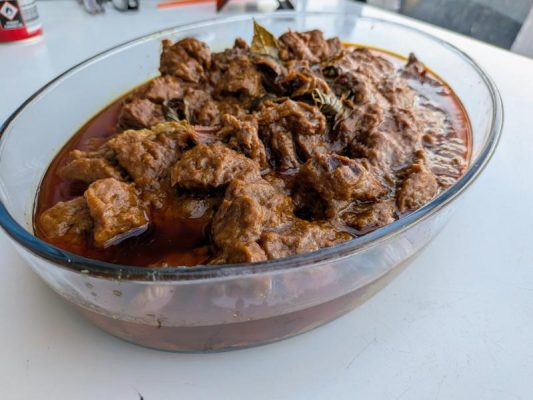
Malaysian Chicken Curry –
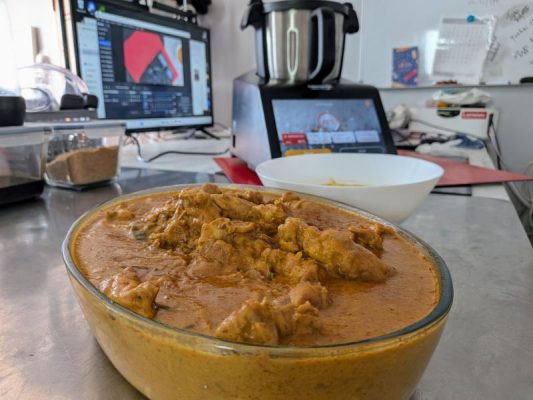
Fish Paste for Yong Tau Foo etc. –
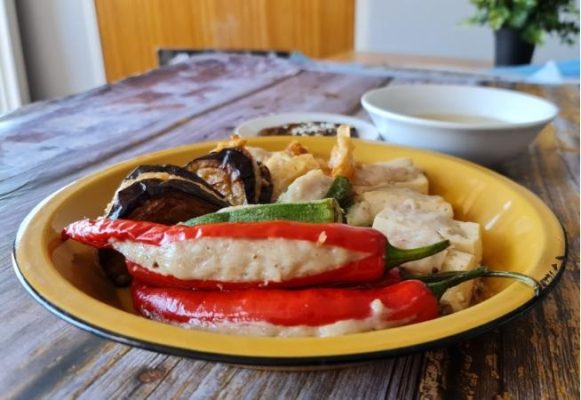
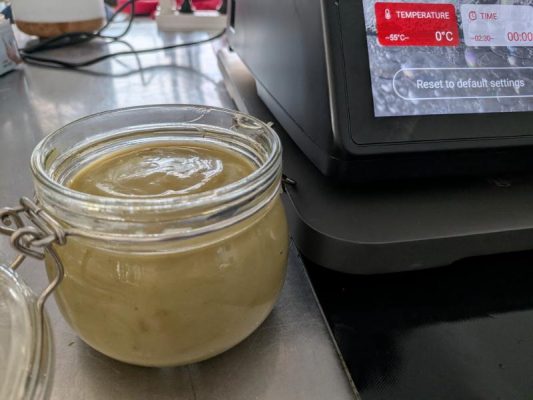
Kaya –
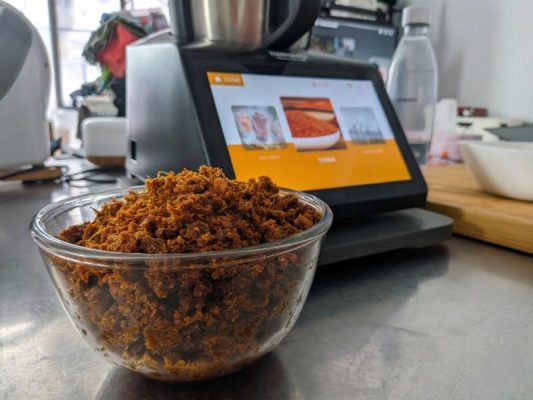
Serunding –
Sambal Udang Kering
Sambal Belacan Tumis
Prawn Stock Paste
————
Last weekend, I ran a Live broadcast covering some of the dishes above, along with my take on the Thermocook’s other functionalities eg. in processing hardy Malaysian ingredients.
Here’s the 45-minute recording –
I’m not here to tell you whether the Thermocook or the Thermomix is better – it’s for you to decide, based on your needs, but here are eight differences between the two machines that I’ve found, as it pertains to my style of Malaysian cooking –
- Bigger bowl – the Thermocook comes with a 3L bowl, nearly 50% bigger than the Thermomix’s, which is 2.2L. I have comfortably cooked 2kg of beef and 2.5kg of chicken ribs in it. The bigger bowl suits me because I cook for my business; if you have a big family or feel that the Thermomix’s bowl size is too small for the kind of meals you prepare, this feature is definitely something to consider.
- Removable blade plus separate stirrer attachment – the stirrer allows me to cook softer proteins like chicken on the bone without having the meat torn and stabbed by the blades (yes it does stab and tear in the Thermomix even on reverse stir).
- Wider bowl base – this means that the Thermocook’s bowl is more in the shape of a food processor while the Thermomix’s is more like a blender. The wider base makes a difference in how the food in the bowl moves around – great for cooking and for processing fish paste because of the bigger base surface area, though if you want to blend ingredients like garlic or sugar finely, you would need more of said ingredients or they’ll just get pushed to the sides of the bowl.
- The Thermocook comes with a grater attachment ie. what’s known as a Cutter in Thermomix-speak. If you want to grate vegetables in a Thermomix you have to buy the Cutter separately (last I checked it was A$199).
- The Thermocook does not require a subscription for you to access the 1000-odd built-in recipes. The Thermomix comes with tens of thousands of recipes on their proprietary Cookidoo platform and you can even programme your own recipes in it – caveat being that it’s subscription-based at about $89/year.
- The price – the Thermocook Pro M 3.0 is about $1000 cheaper than the Thermomix TM7.
- The Thermocook is less locked-down than the Thermomix – eg. two of the Thermomix TM7’s main differences from the previous model, the TM6, are that –
a) it has a browning mode that can cook at 160C and
b) it has an open-cooking mode.The problem is that both these modes, which got me really excited when the Thermomix TM7 was first released, are so locked down that they’re useless to me.The browning mode does not allow you to adjust the stirring speed/frequency, so my hopes of cooking rempahs (spice pastes) at 160C were crushed when I realised the stirring was too intermittent and my spice pastes were getting burnt as a result, whereas the open cooking mode only maxes out at 100C and does not stir at all, which means unless you’re boiling water or thin broth in it, it’s more or less useless.Also, the TM7 (unlike prior models) has a lid without a hole in the middle where the cap on older models used to sit, which you could remove when sautéing for the steam to escape – instead it’s got a few small vents that aren’t big enough so the steam gets trapped when cooking rempahs so it takes longer for the oil to separate and doesn’t turn out as “garing” (ie. dry).Which, again, you’d think you could work around by using the Open Cooking mode, but remember that setting maxes out at 100C plus it doesn’t stir so your rempah will burn (I’m venting now, aren’t I?).
- You can cook in the Thermocook without the blades stirring (eg. for sous vide cooking) or you can just remove the blades unlike with the Thermomix, where you need to use a blade cover (which reduces the capacity of the bowl even further) or risk having your sous vide pouches or other soft contents breaking up.
Over the coming weeks and months, I expect to try more dishes in the Thermocook and I will, of course, share them with everyone, though if you want to make sure you don’t miss them, your best bet is to sign up to my email list at jackiem.com.au/email (don’t forget to confirm your subscription and don’t be a jerk and report me for spam down the track – just hit the unsubscribe link if you don’t want to hear from me again).
Finally, if you are in the market for a Thermocook, you can buy it from my affiliate link here – jackiem.com.au/thermocookbuy – you will get the following bonuses if you do (UPDATED 5 June 2026)-
- A complimentary glider board valued at $98 (IMPORTANT – select WITH SLIDING BOARD and on checkout, use code – JackieM to have the cost deducted from your total)
- Once the order has been processed, forward your receipt to jackie@jackiem.com.au I’ll give you access to my online Malaysian Cooking Club for 12 months (value USD$69) where you get to join us on Zoom for private cooking sessions and get your hands on my recipes and eCookbooks. Details here – jackiem.com.au/skool
Finally, finally, because I’ve been asked – the Thermocook is not currently available for sale to the USA because of the different voltage used there – I’ll let you know if that changes down the track.
It IS available for shipping to some other places eg. Malaysia & Singapore, though you’ll obviously have to pay for postage, and since they don’t currently have authorised serviced centres there, you’ll have to source your own, though the company WILL supply free spare parts. Hit me up if you need details and I’ll find out for you.
Thanks for your research… Keep it coming!
Re : cooking with 160 deg temp and wanting the food to charr without burning. Does the thermocook turn its blades while at 160 and effectively dry the ‘rempah’?
Hey Tina, the Thermocook’s max temp is 130C but not locked down so yes it turns its blades and dries the rempahs effectively; in manual mode in both the TM6 & TM7 as you would know, the max temp is 120C – in other words, the Thermocook can cook a rempah in less time because of the higher threshold.