No Bamboo, No Worries – Easy Lemang in the Thermocook
It was around 2008 maybe? My Concord restaurant was still in full swing, and I would take to the walking trails in the foreshore nearby during my downtime. I remember seeing all the wild bamboo along my path and having a moment of inspiration – what if I could ask the council for permission to take some back to my restaurant so I could make lemang? I remember then thinking the answer would be no, for a hundred different bureaucratic reasons, so I never bothered to contact them.
What is lemang, anyway? Fact is, even some Malaysians don’t know – case in point – when I dropped some off for my sister (from the batch in this video) she thought they were oversized pulut panggangs (sticky rice rolls with a spicy dried shrimp and coconut filling, wrapped in banana leaf). Quite funny, really.
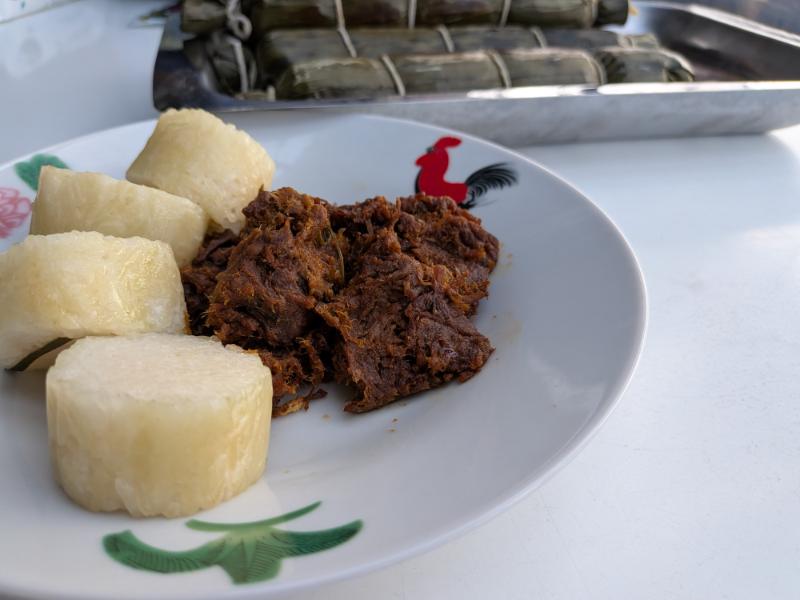
So, for the uninitiated, lemang is compressed sticky rice typically served with rendang during Malay festive occasions like Hari Raya. And the way they make it is to fill banana leaf-lined bamboo tubes with soaked sticky rice and coconut milk, and then cook it over an open fire for hours.
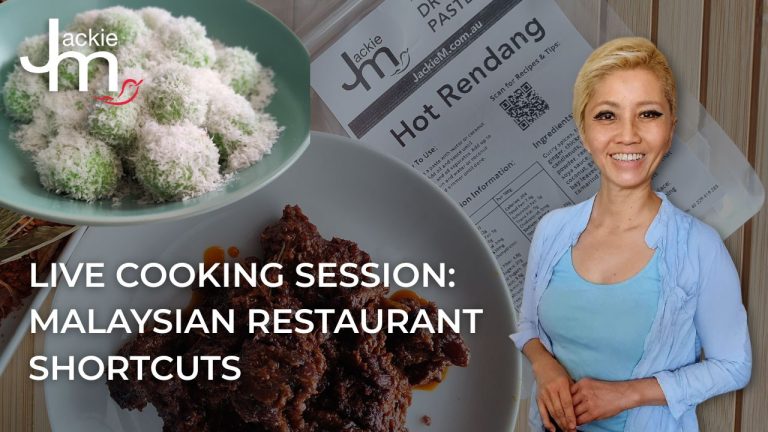
Here’s my video on how to make it, the easy way –
Back then, when I described it to my staff member (and righthand man) Trung, he had an idea. Being Vietnamese, Trung was familiar with the concept of banana leaf-wrapped rice – specifically in hindsight for me, something called Bánh Tét.
(Wikipedia describes it thus – Bánh tét is a Vietnamese savoury but sometimes sweetened cake made primarily from glutinous rice, which is rolled in a banana leaf into a thick, log-like cylindrical shape, with a mung bean and pork filling, then boiled. After cooking, the banana leaf is removed, and the cake is sliced into wheel-shaped servings.)
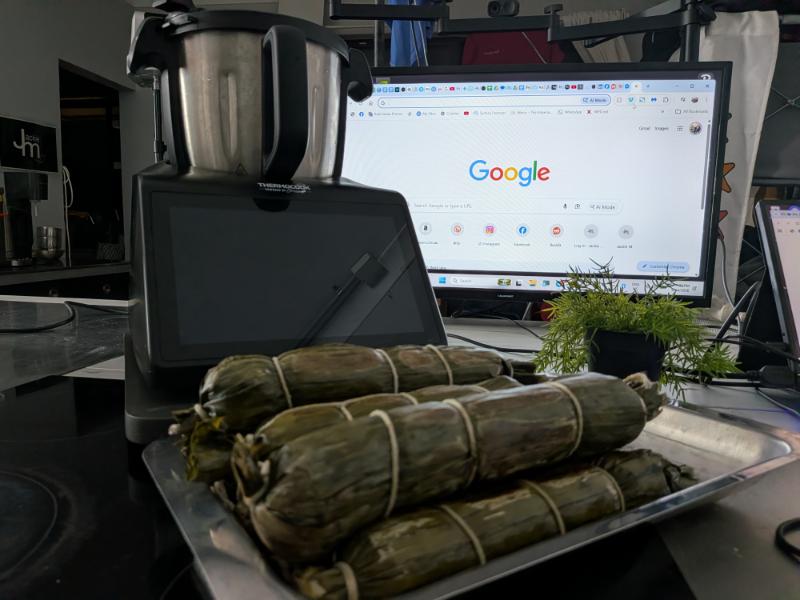
So lemang doesn’t come with any filling, but the concept and visual representation are pretty similar. And thanks to Trung, we figured we could make lemang without using the bamboo cylinder – instead, we par-cooked the glutinous rice to help it keep its shape when wrapping it in banana leaf like a giant sushi roll – then tied it up and steamed it further.
When we used to serve our satays with nasi himpit (compressed rice), our Australian customers would eat everything but leave the nasi himpit on the plate – I guess eating cold, dense rice cubes hadn’t taken off yet on these shores.
Anyway, I kind of figured it’d be the same with compressed glutinous rice, so we never put lemang on the restaurant menu. We made it and ate it and really liked it, then moved on with the chaos of running a restaurant.
Fast forward to 2026 and in our recent project with Tourism Perak we had the opportunity to eat Lemang with Rendang Tok made by the iconic Rendang Tok Mak Nik based in Ipoh. I wrote about them in this blog post recently; you can check it out here – Malay Food In Perak – 4 Must-Try Places
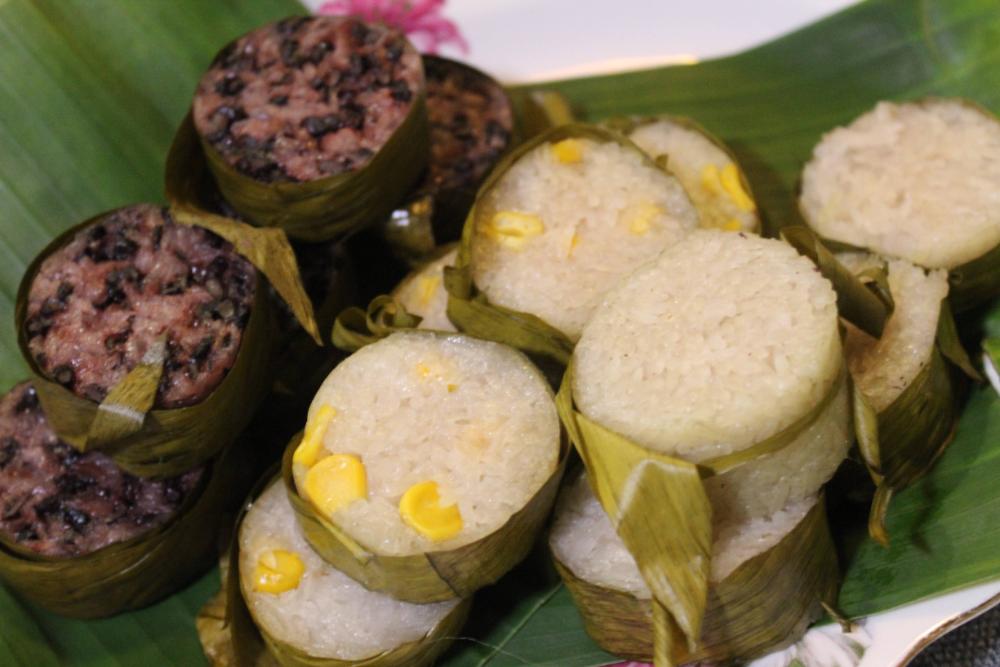
This revived my interest it making lemang, so I decided to do more research on it and as it turns out, what we tested successfully back during my restaurant days is something that contemporary Malaysian food content creators eg. Che Nom – https://www.youtube.com/@chenom – have done as well.
This iteration of my lemang recipe is based on Che Nom’s, but I’ve simplified it further – I don’t pre-soak the glutinous rice overnight, since I don’t generally approach my cooking with the foresight and patience to prep anything that far in advance (just like I don’t like to queue up for the privilege to eat at an establishment etc.).
And I do the steaming in the Thermocook Pro M 3.0, taking advantage of its large capacity and powerful steaming function.
Most of the ingredients in this recipe are pretty easy to get your hands on – I actually use frozen banana leaves (check the freezer section of your Asian grocery store that caters to Southeast Asian cooks) – but if you can’t get even that, maybe replace the leaves with oven bags (cut to size if necessary; I’m speaking in hypotheticals here), and skip the grilling bit. You’ll miss the hint of aroma imparted by the leaves but it’ll still be good.
Easy Lemang Recipe with Thermocook Steamer
INGREDIENTS:
3 cups glutinous rice
1 tsp salt
1 tsp sugar (optional)
½ cup coconut cream
1 pandan leaf, tied into a knot (optional)
Some banana leaves for wrapping, approx. 30x30cm and wiped clean
Some twine, cut into 50cm lengths
1 TBSP oil & pastry brush
Makes about 6 rolls depending on size.
METHOD:
- Soak 3 cups glutinous rice with hot water (from kettle) for 10 mins, making sure there’s about 1cm of water covering the surface. Strain and place rice in steamer. Bury the pandan leaf in it, and add the salt and sugar. Steam 20 mins x 120C.
- Transfer into bowl and stir in the coconut cream.
- Optionally brush a little oil on surface of banana leaf (dull side). Place large scoop of half-cooked sticky rice on it. Roll into a taut cylinder about 8cm in diameter or according to personal preference.
- Use twine to tie and secure.
- Steam again for 20-30 mins.
- Remove from steamer and ightly grill the rolls on a frying pan brushed with a little oil.
- Allow to cool completely; remove string and banana leaf and cut into discs about 2cm thick.
- Serve with rendang.
A) Re: The Thermocook Pro M 3.0
If you are in the market for a Thermocook, you can buy it from my affiliate link here – jackiem.com.au/thermocookbuy
You will get the following bonuses if you do –
- A complimentary glider board valued at $98 (IMPORTANT – add the glider board to your order, then use code – JackieM where prompted – and it’ll deduct the amount from your cart)
- Once the order has been processed, send me your proof of purchase and after 30 days (this is how long it takes to show up at my end) I’ll send you a 5-pack set of my Handcrafted Dry Curry Paste Kits valued at $75 + shipping (Australian addresses only)
b) Re: Rendang
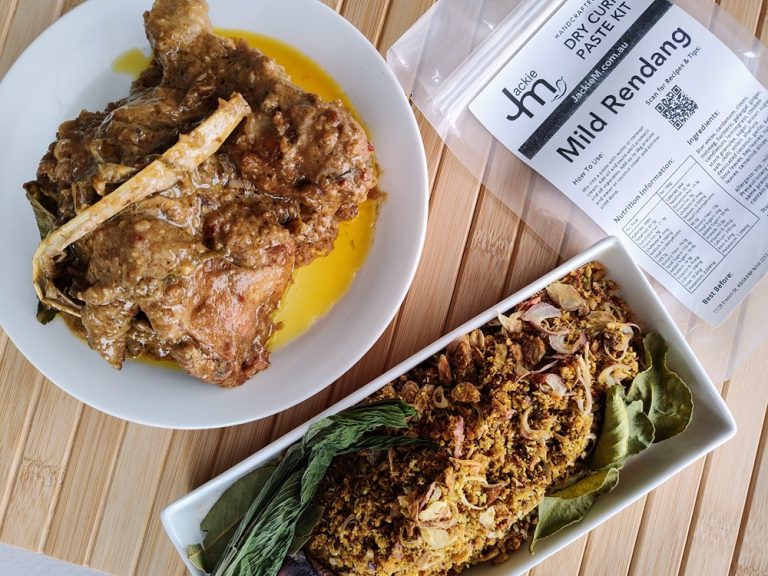
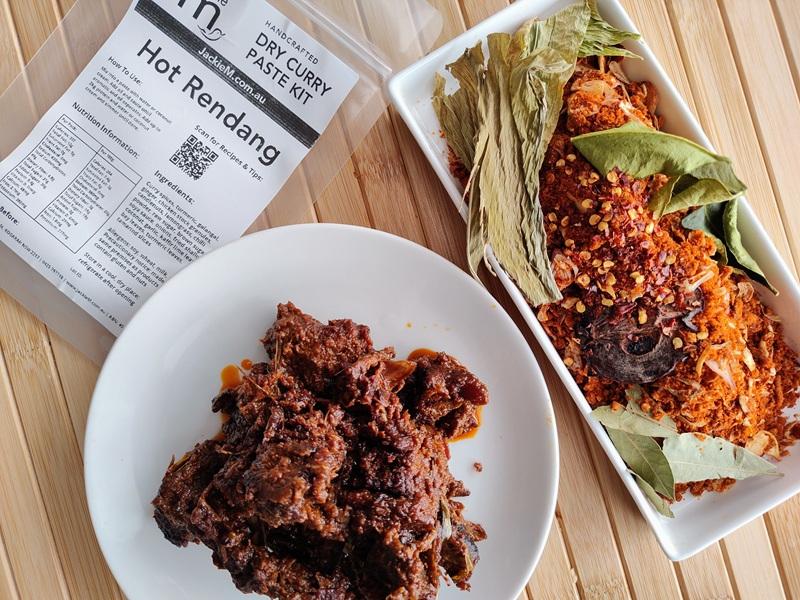
The rendang in these photos was made in the Thermocook using my Handcrafted Dry Rendang Paste kit. You can get that along with the rest of my range of pastes and products at Shop.JackieM.com.au
c) Re: My Online Malaysian Cooking Club on Zoom
This recipe was originally shared with members of my online Malaysian Cooking Club.
We get together on Zoom twice a week to cook, chat, and share cooking tips. Most of us are overseas Malaysians and Singaporeans, so we know the pain of trying to recreate the flavours of our home countries with limited resources. Want to join us? You can do so at JackieM.com.au/Skool